
How the Format Works
The tournament runs during November and December, designating certain regular-season games as tournament contests. The structure:
- Group Stage: All 30 teams divided into six groups of five (three per conference). Each team plays four group-stage games against group opponents.
- Quarterfinals: Top team from each group plus two wild cards per conference (8 total teams) advance to single-elimination quarterfinals.
- Semifinals and Final: Quarterfinal winners advance through a bracket. The championship game is played at a neutral site in Las Vegas in mid-December.
Do Tournament Games Count in the Standings?
Yes — every tournament game counts as a regular-season game in both the win-loss record and all player statistics. The tournament adds no additional games to the schedule; it re-designates existing regular-season contests as tournament games.
Prize Money: Why Teams Take It Seriously
- Championship team: $500,000 per player — paid directly by the NBA, separate from team salary
- Runner-up: $200,000 per player
- Semifinalists: $100,000 per player
- Quarterfinal exits: $50,000 per player
A 15-player championship roster distributes $7.5 million total. This figure is meaningful enough that even marginal roster players have genuine financial motivation to compete in tournament games, and star players have cited the prize money as a real source of competitive drive.
Tournament Winners
- 2023-24: Los Angeles Lakers — Anthony Davis won the tournament MVP in a dominant run
- 2024-25: Oklahoma City Thunder — SGA won tournament MVP; OKC went on to win the full NBA championship the same season
The Court Designs: Instantly Recognizable
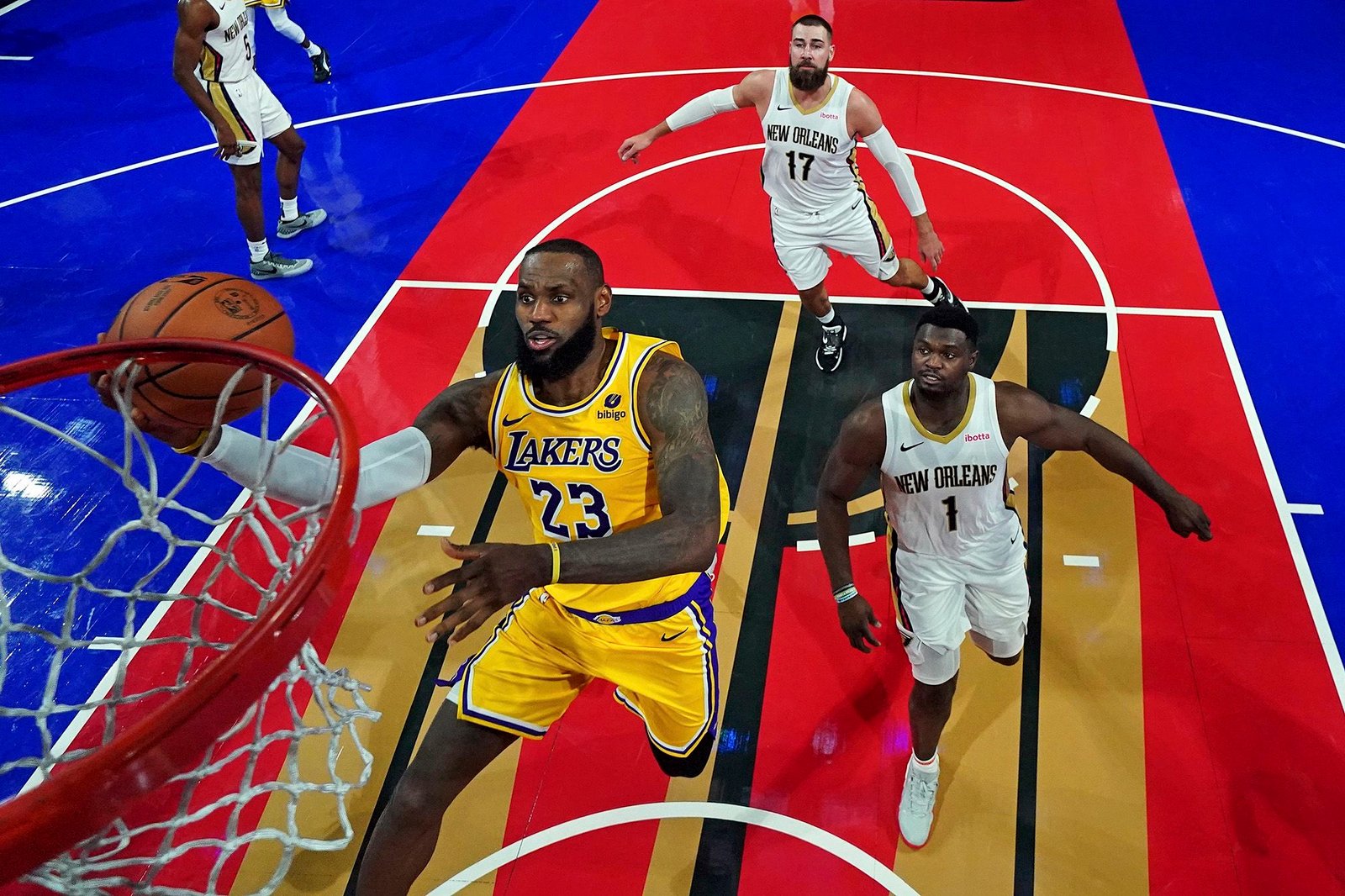
One of the most immediately distinctive features of the tournament is its unique court designs. Each team plays group-stage games on specially designed courts with bold tournament-specific color schemes different from their standard floors. The designs generated enormous social media coverage in the first year and have become a visual signature of the format.
Why the NBA Introduced the Tournament
The in-season tournament serves several goals: creating must-watch early-season games when fan engagement traditionally lags; giving lower-seeded teams meaningful competition beyond playoff aspirations; and building a marquee event in Las Vegas that serves as both a product and a promotional vehicle for the league’s expansion into the sports betting market.
Frequently Asked Questions: NBA In-Season Tournament
Do tournament games count in the regular season record?
Yes. Every tournament game counts as a regular-season win or loss.
How much do players earn for winning the tournament?
Championship players receive $500,000 each, paid directly by the NBA separate from their team salary.
Who won the first NBA In-Season Tournament?
The Los Angeles Lakers won the inaugural 2023-24 tournament. Anthony Davis was named tournament MVP.
Read More: NBA Steals Leaders: The Greatest Ball Hawks in NBA History

No comment