
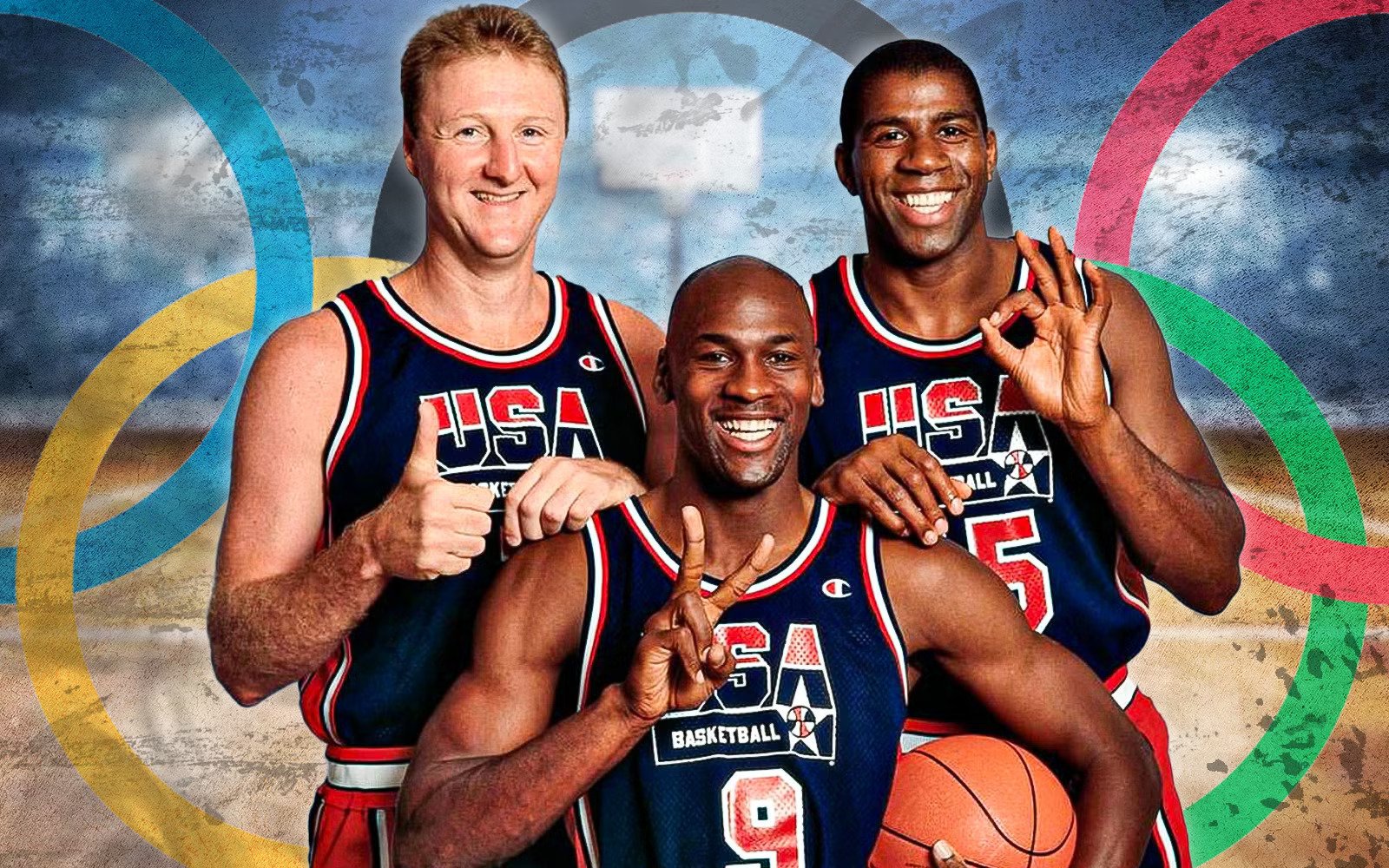
The Full Dream Team Roster
- Michael Jordan — Chicago Bulls, 5-time MVP, considered the best player in the world
- Magic Johnson — Los Angeles Lakers, retired but included for star power and basketball IQ
- Larry Bird — Boston Celtics, playing through chronic back pain in his farewell international stage
- Charles Barkley — Phoenix Suns, the team’s leading scorer in Barcelona
- Patrick Ewing — New York Knicks
- Karl Malone — Utah Jazz
- John Stockton — Utah Jazz
- Scottie Pippen — Chicago Bulls
- Clyde Drexler — Portland Trail Blazers
- Chris Mullin — Golden State Warriors
- David Robinson — San Antonio Spurs
- Christian Laettner — Duke University — the sole college player, controversial over Isiah Thomas’s exclusion
Dream Team Statistics at the 1992 Barcelona Olympics
- Record: 8-0 (perfect)
- Average margin of victory: 43.8 points per game
- Closest game: 32 points (vs. Croatia in the gold medal game, 117-85)
- Largest margin: 68 points (vs. Angola — 116-48)
- Total points scored over 8 games: 938
- Total points allowed over 8 games: 588
- Charles Barkley — team leader with 18.0 PPG
- Michael Jordan — 14.9 PPG
- Magic Johnson — 8.0 PPG, 5.5 APG
Why Charles Barkley Was the Team MVP
1992 Dream Team, The counterintuitive statistical finding from Barcelona: Charles Barkley, not Michael Jordan, led the Dream Team in scoring. Barkley averaged 18.0 PPG and thrived against overmatched international forwards who could not handle his combination of quickness and power. He played with an evident joy and energy that made him the team’s emotional engine as much as its statistical leader.
Jordan, meanwhile, averaged 14.9 PPG — third on the team — in a context where the outcomes were never in doubt and the greatest individual challenge was managing the collective star power in the locker room rather than winning on the court.
The International Reaction: When Basketball Became Global
The Dream Team’s most lasting impact was not the gold medal — it was the inspiration it provided to a generation of international players. Dirk Nowitzki in Germany, Tony Parker in France, Pau Gasol in Spain, Manu Ginobili in Argentina, and dozens of other future NBA stars cited the 1992 Dream Team as the moment they committed to basketball as a career.
Within 15 years, international players were winning NBA MVP awards and championships regularly. The 2004 Olympic bronze-medal result — a weakened American team losing to Argentina and Puerto Rico — was the direct consequence of the global development the Dream Team had catalyzed.
The Isiah Thomas Controversy
1992 Dream Team, The most discussed omission in Dream Team history is Isiah Thomas, the Detroit Pistons star widely considered one of the five best point guards in NBA history. His exclusion — officially unexplained by USA Basketball but widely attributed to Michael Jordan‘s unwillingness to play alongside him — remains a source of debate. Thomas had won two championships with Detroit, including titles over Jordan’s Bulls in 1989 and 1990.
Read More: NBA In-Season Tournament Rules Explained: Format, Prize Money and History
Frequently Asked Questions: The Dream Team
What was the Dream Team’s average margin of victory?
The 1992 Dream Team averaged 43.8 points per game margin of victory across their 8 Olympic games in Barcelona.
Who led the Dream Team in scoring?
Charles Barkley led the team with 18.0 PPG — ahead of Michael Jordan’s 14.9 PPG and Clyde Drexler’s 10.5 PPG.
Why wasn’t Isiah Thomas on the Dream Team?
Thomas was widely reported to have been excluded due to Michael Jordan’s reluctance to play alongside him. USA Basketball never officially confirmed this explanation.
No comment